 Written by

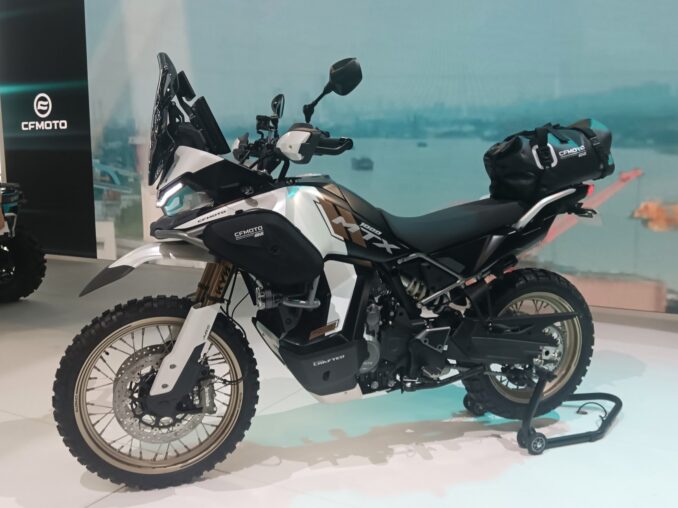
CFMOTO’s 1000MT-X has joined the New Zealand adventure-bike market, sitting above the 800MT-X in the brand’s range. It is aimed at riders who want a bike for long days on the road and trips that continue onto gravel. There is also a 1000MT-X LS for riders who want a lower seat.
What do you get for $19,990?
Both versions are listed by CFMOTO New Zealand at $19,990 plus on-road costs. They use a 946.2 cc parallel-twin engine producing a claimed 83 kW and 105 Nm. The equipment list includes adjustable KYB suspension, Brembo brakes, a 21-inch front wheel and 18-inch rear wheel, cruise control, heated grips and seat, and a 22.5-litre fuel capacity.
There is plenty of technology to get familiar with, too: five riding modes, adjustable traction control, cornering ABS, a two-way quickshifter, tyre-pressure monitoring and an 8-inch touchscreen display. Those are specifications from CFMOTO – we have not ridden the bike, so we cannot yet say how well the systems work on NZ roads.
The LS is more than a different seat
The standard CFMOTO 1000MT-X has an 870 mm seat height. The LS lowers that to 830 mm, a substantial 40 mm difference when you are stopping, parking or manoeuvring a loaded bike. CFMOTO achieves the lower stance with a revised suspension setup: the front suspension travel drops from 230 mm to 190 mm.
That makes the LS particularly interesting if you have dismissed larger adventure bikes because of their height. A lower seat can help with reach to the ground, though the feel will also depend on seat shape, suspension sag and your leg length. CFMOTO lists the bike at 222 kg wet, so sitting on both versions and moving them around at a standstill would be time well spent before choosing.
Is it worth a closer look?
On paper, the 1000MT-X offers a lot of touring and adventure equipment for its listed price. The LS gives riders another way into the same engine and electronics package without having to arrange an aftermarket lowering kit. The trade-off is reduced suspension travel, which matters if rougher off-road riding is a priority.
The useful next step is a test ride. Check how easily you can reach the ground, whether you can manage the bike’s weight while parking, and how the riding position feels both seated and standing. Those answers will tell you more than a specification sheet can.
Would you choose the standard 1000MT-X or the lower LS?